Love Padel? Let’s keep you on the court!
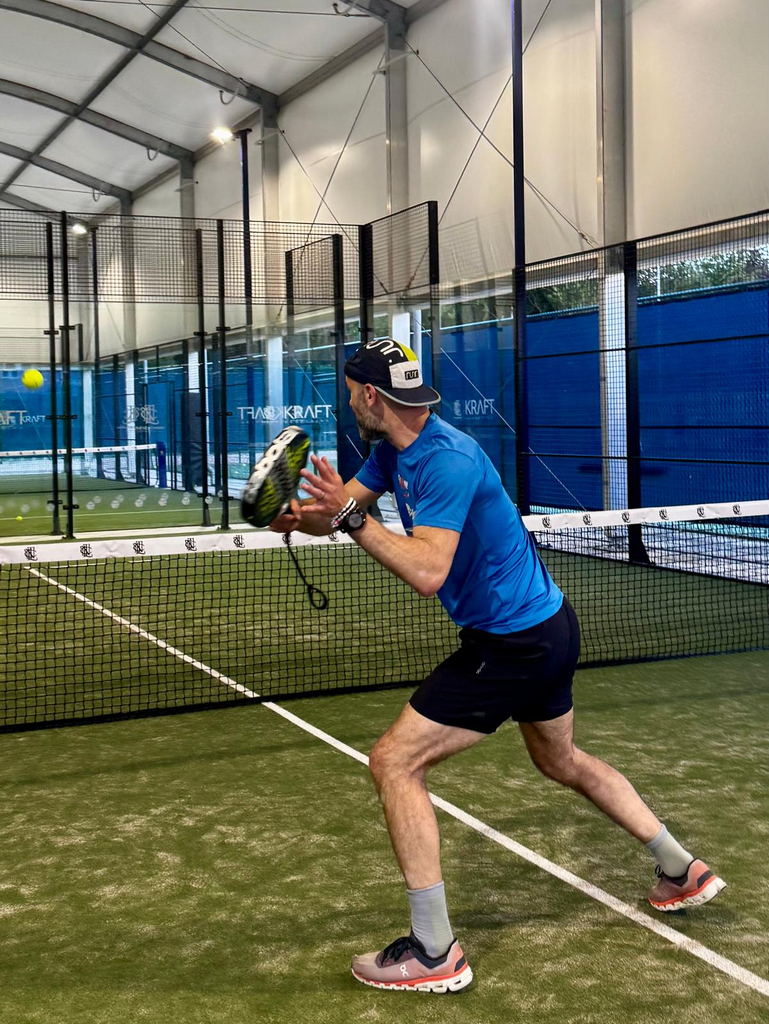
Padel has become incredibly popular, and we’re certainly seeing the effects here at Altrincham Physiotherapy!
It’s even become a firm favourite in Catherine’s household, with her husband getting in on the action too, as you can see from the photos!
As more people take up the sport, we’re also seeing an increase in Padel-related injuries, particularly involving the lower back, shoulders and calves.
It’s hardly surprising when you think about what a game involves. Quick changes of direction, repeated lunges, twisting movements and overhead shots all place demands on your body.
But with the right combination of strength, mobility and control, you can help reduce your risk of injury and keep enjoying your time on court.
This month, Cath is sharing some practical advice and exercises to help you do just that.
When we talk about rehabilitation, it can sound quite clinical. In reality, it’s often about something much more personal.
It might be getting back on the golf course after an injury, walking the dog without worrying about pain, returning to work after surgery, feeling stronger on the stairs or having the confidence to play with the grandchildren again.
At Altrincham Physiotherapy, those everyday goals are a really important part of rehabilitation.
In this video, Cath demonstrates some practical exercises using a resistance band and light hand weights, along with calf-strengthening and balance exercises.
They’re designed to help develop shoulder strength, lower leg strength and stability, all useful for moving around the Padel court with greater control and confidence.
Rotate with control: Why Pilates can help your Padel game
Think about how often you twist, reach or change direction during a match.
Your body needs to transfer power from your legs, through your core and into your shoulder and racket. And it’s not just about being flexible. You need the strength and control to manage those movements too.
That’s where Pilates can be particularly helpful.
Pilates develops core control, balance, mobility and body awareness, all of which can support the rotational movements used in Padel.
Stronger muscles, stronger game
Mobility is important, but strength matters just as much.
During a Padel match, your muscles are constantly working to accelerate, slow you down, absorb force and help you change direction.
There are three areas Cath particularly wants Padel players to think about:
Your core: It’s not just about twisting. Your core also needs to resist excessive movement when you’re reaching, braking or changing direction.
Your shoulders: Overhead shots place considerable demands on the shoulder muscles. Strength around the rotator cuff and shoulder blade helps support repeated overhead movements.
Your calves: This is a particularly important one! Calf strains and tears are among the injuries we see most frequently following Padel matches. Your calf muscles work like springs, repeatedly absorbing and releasing energy as you move around the court.
Building strength gradually can help your body cope with these demands.
In this video, Cath demonstrates some practical exercises using a resistance band and light hand weights, along with calf-strengthening and balance exercises.
They’re designed to help develop shoulder strength, lower leg strength and stability, all useful for moving around the Padel court with greater control and confidence.
Listen to your body and keep enjoying the game
We certainly don’t want to put anyone off playing Padel. It’s a fantastic way to stay active, have fun and enjoy some friendly competition.
But it’s worth knowing when your body might be telling you something isn’t quite right.
Keep an eye out for:
- Lower back pain that keeps returning when you twist or rotate.
- Shoulder pain during or after overhead shots.
- Calf tightness that gradually gets worse.
- Sudden calf pain or a sensation like you’ve been kicked in the back of the leg.
- Pain that makes you change the way you move or play.
Not every ache means you need to stop playing, but persistent or worsening symptoms shouldn’t be ignored.
At Altrincham Physiotherapy, we can help assess injuries, identify areas that need strengthening and guide you through exercises appropriate to your needs and your sport.
And remember, you don’t have to be injured to benefit from Pilates or strength training. Building better movement, strength, and control now can help you continue enjoying the activities you love.
Don’t ignore what your body is telling you
If you’re experiencing pain or would like advice on preparing your body for Padel, we’d be happy to help.
Book a consultation with our team:https://altrinchamphysio.co.uk/contact/
Or explore how we can help:
https://altrinchamphysio.co.uk/what-we-treat/